Lake Winnipeg front and centre at IAGLR 2026
Posted: June 18, 2026
The International Association for Great Lakes Research (IAGLR) conference was hosted in Winnipeg this year, bringing together more than 700 researchers, water practitioners, policymakers, students, and community organizations from across North America. As one of the largest freshwater science conferences in North America, IAGLR provides an important opportunity for the Lake Winnipeg Foundation (LWF) to share knowledge, build partnerships, and explore innovative solutions to water quality challenges.
We had a strong presence at the event, highlighting our work and fostering new connections with researchers and practitioners working to protect freshwater ecosystems. Despite the complexity of the challenges facing our waters, there was a shared understanding that by working together, this community of experts could make meaningful progress towards healthier rivers and lakes.
Sharing science and solutions
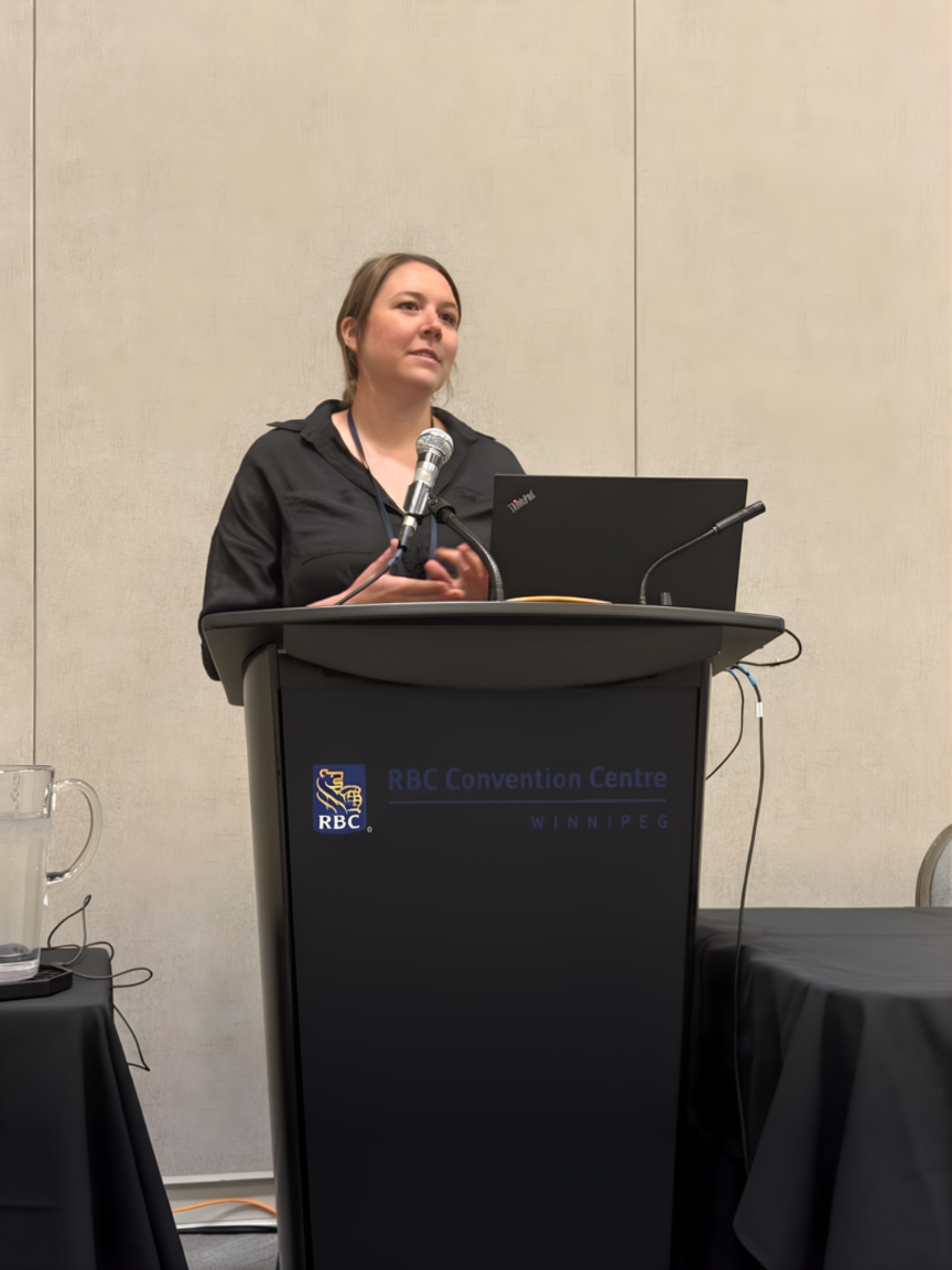
One of the conference highlights was a plenary presentation delivered jointly by our executive director, Alexis Kanu, and LWF Science Advisor, Dr. Scott Higgins. Alexis and Scott explored the science behind eutrophication and discussed the policy solutions needed to reduce phosphorus loading to Lake Winnipeg.
LWF’s Programs Director, Chelsea Lobson, partnered with DataStream to chair and present a session focused on how community-based monitoring programs inform research, policy, and water management decisions. The session showcased the growing importance of community science in addressing complex environmental challenges and highlighted the valuable role community members play in generating long-term water-quality data.
Another session that garnered a lot of interest focused on targeted approaches to phosphorus reduction from the watersheds. The session featured presentations from LWF Water Data Specialist Karl Friesen-Hughes, Science Advisors Dr. Greg McCullough and Dr. Nora Casson (University of Winnipeg), and Thomas Saleh (IISD Experimental Lakes Area).
Karl presented ten years of data from the Lake Winnipeg Community-Based Monitoring Network (LWCBMN), while Greg, Nora, and Thomas’ presentations included how LWCBMN data are being used to support research, watershed modelling, and phosphorus reduction strategies. It was great to see such strong interest in targeted approaches and to learn from the Laurentian Great Lakes, where these approaches have been in place for much longer.
Building relationships and growing networks
IAGLR also provided valuable opportunities to strengthen existing partnerships and establish new ones. LWF staff connected with long-time collaborators and Science Advisors while also building new relationships. These conversations helped identify opportunities for future collaboration and ensured that LWF remains connected to leading freshwater research occurring across Canada.
Program Coordinator Fallon Moreau spent time networking with community-based monitoring practitioners from across the country, exchanging ideas on volunteer recruitment, training, and engagement. These conversations generated new connections and valuable insights that will help strengthen the LWCBMN program moving forward.
Read more about Fallon's experience at IAGLR here.
Seeing the impact of PhosphorusExplorer.ca
One particularly encouraging outcome from the conference was seeing the widespread use of PhosphorusExplorer.ca. Throughout the week, LWF staff noticed multiple presentations included maps generated from the platform. This was exactly the goal behind developing Phosphorus Explorer: making water quality data more accessible and useful to researchers, watershed managers, policymakers, and the public.
Before the launch of Phosphorus Explorer, much of this information was available only in static PDF reports. Seeing researchers actively using the platform in their own work demonstrates the value of making data easier to access, explore, and apply.
Inspiring the next generation
IAGLR also provided an opportunity for LWF summer student Jack Pilkey to experience a major scientific conference firsthand. Jack attended one day of the conference and came away inspired by the breadth of research being conducted across the Great Lakes and Lake Winnipeg basins.
Exposure to cutting-edge freshwater science and the opportunity to meet researchers and practitioners from across North America was a valuable learning experience.
Looking ahead
Conferences like IAGLR play an important role in connecting science and policy. The strong interest in LWF’s work, the enthusiastic reception of PhosphorusExplorer.ca, and the many new relationships formed throughout the week reaffirm the importance of collaborative approaches to improving water quality.
We are grateful to everyone who attended our sessions, shared ideas, and helped showcase how science can inform decision-making and contribute to a healthier Lake Winnipeg.