publications
IJC submission re: proposed nutrient targets for the Red River
Posted:
Our submission to the International Joint Commission supports proposed phosphorus objectives for the Red River, based on a robust body of research demonstrating that phosphorus drives the growth of harmful algal blooms in freshwater ecosystems. We do not support proposed nitrogen objectives, since reducing nitrogen loading will have no impact in reducing algal blooms in Lake Winnipeg.
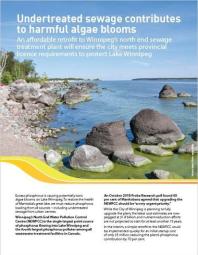
Report: Retrofit to Winnipeg’s north end sewage treatment plant would help protect Lake Winnipeg
Posted:
Together with the International Institute for Sustainable Development (IISD), we are recommending an interim retrofit to Winnipeg’s largest sewage treatment plant. A chemical system could be implemented quickly and at low cost to significantly reduce the facility’s phosphorus contribution to Lake Winnipeg.
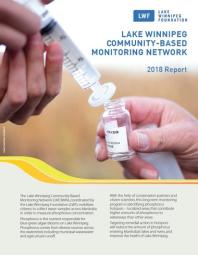
LWCBMN 2018 Network Report
Posted:
The Lake Winnipeg Community-Based Monitoring Network (LWCBMN) 2018 report confirms the existence of phosphorus hotspots, highlights the importance of frequent and responsive sampling, and explains how storing water on the land can protect Lake Winnipeg.
Provincial submission re: Bill 24
Posted:
Presenting to the Standing Committee on Legislative Affairs on proposed amendments to Manitoba’s Environment Act, we recommended that no changes be made to legislation governing Manitoba’s hog industry until water-quality data is available to determine if current manure management practices are effective at keeping phosphorus out of our lakes and rivers.
Provincial submission re: Livestock Manure and Mortalities Management Regulation
Posted:
Our submission recommends that no changes to regulation or associated legislation dictating where, when and how livestock manure can be used as an agricultural fertilizer be made without first providing evidence that increased manure application will not result in a corresponding increase in phosphorus loading to Lake Winnipeg.